
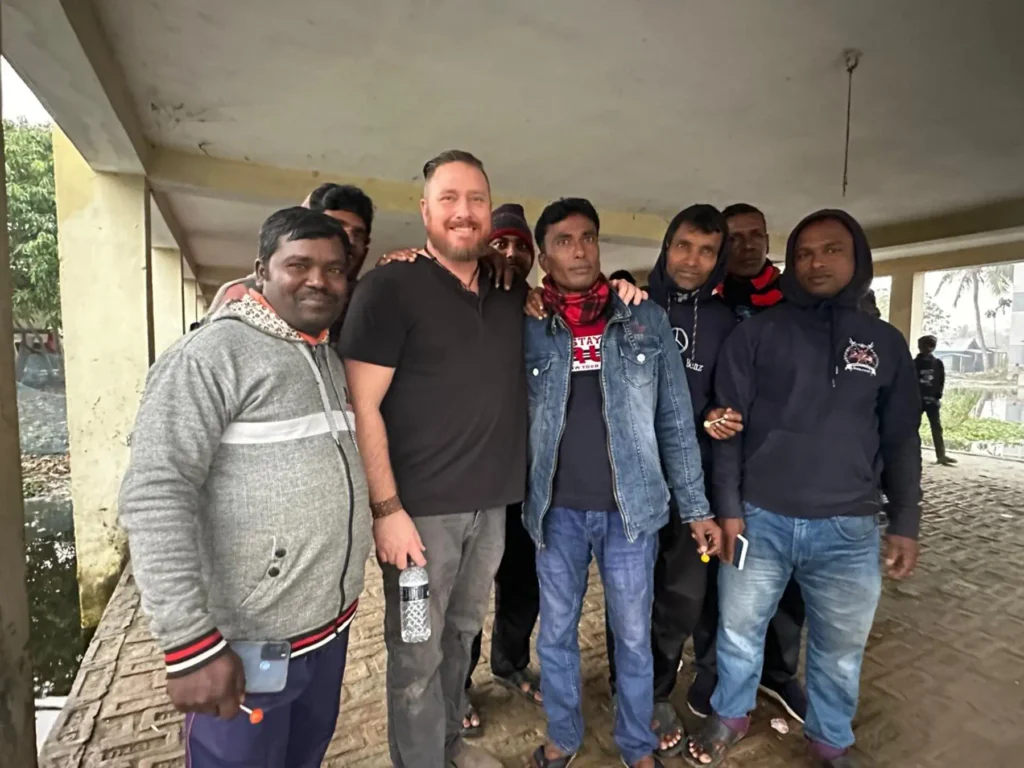
Christian missions in Bangladesh are most sustainable when local believers are equipped to lead.
Foreign missionaries, churches, and ministry partners can play valuable roles by providing prayer, resources, training, financial support, and encouragement. But long-term Christian ministry cannot depend entirely on outsiders. Churches grow stronger when Bangladeshi pastors, teachers, evangelists, and ministry leaders are equipped to disciple believers and serve their own communities.
For Living Word Foundation, this principle is central to Christian ministry in Bangladesh. Rather than building ministry around permanent foreign leadership, the goal is to work alongside indigenous Christian leaders who understand the language, culture, relationships, and spiritual needs of the people they serve.
That approach is not simply more practical. It can help create Christian communities that remain strong, culturally rooted, and capable of multiplying over generations.
What Is Indigenous Christian Leadership?
In Christian missions, indigenous leadership generally refers to ministry led by Christians who are part of, or deeply rooted within, the communities being served.
In Bangladesh, that may include:
- Local pastors
- Evangelists
- Bible teachers
- House-church leaders
- Discipleship leaders
- Christian educators
- Ministry coordinators
- Believers who mentor and disciple others
The key idea is that Christian ministry becomes locally led rather than permanently dependent on an outside missionary or foreign organization.
Indigenous leadership does not mean outside churches and ministries have no role.
It means their role should increasingly be one of support, partnership, encouragement, and equipping rather than control.
Christianity in Bangladesh Already Has Deep Local Roots
Christianity is a minority religion in Bangladesh, but it is not new to the region.
According to Banglapedia’s history of Christianity in Bengal, organized Christian activity in Bengal dates back to the 16th century, when Portuguese Christians and Roman Catholic missionary orders established churches, schools, and other institutions. Protestant missionary activity later expanded throughout Bengal.
Historic examples such as the Dinajpur Baptist Mission Church demonstrate how Christian communities and local church structures developed in what is now Bangladesh over generations.
That history matters because Christian missions in Bangladesh should not be approached as though Christianity exists only because foreign missionaries periodically arrive.
There are Bangladeshi Christian families, churches, pastors, denominations, and ministry leaders with their own histories and relationships.
Effective mission partnerships begin by recognizing and strengthening that existing church.
Local Leaders Understand the Culture
One of the greatest advantages of indigenous Christian leadership is cultural understanding.
A foreign missionary can learn Bengali, study Bangladeshi culture, and develop meaningful relationships. Those efforts are valuable.
But cultural understanding involves much more than language.
A local Christian leader often understands intuitively:
- Family structures
- Community expectations
- Religious traditions
- Social relationships
- Local customs
- Appropriate ways to communicate sensitive ideas
- How people respond to authority
- The role of elders and extended family
- Which approaches are likely to build trust
- Which approaches may unintentionally create barriers
These details can have a major impact on evangelism and discipleship.
A message that seems clear to someone from another country may carry a completely different meaning within a Bangladeshi cultural context.
Local leaders help Christian ministry communicate the Gospel without unnecessarily confusing biblical teaching with foreign cultural practices.
Language Is About More Than Translation
Language is another important reason indigenous Christian leadership matters.
Bengali is Bangladesh’s dominant language, but the country also contains minority ethnic and linguistic communities. Even when people speak Bengali fluently, their family or community may use another language or dialect.
A translator can help communicate words.
A local leader can often communicate meaning.
Christian teaching involves concepts such as grace, sin, forgiveness, sacrifice, faith, discipleship, and salvation. Explaining those ideas clearly may require understanding how people already think about religion, morality, family obligations, community, and spiritual life.
Local Christian leaders can connect biblical teaching with questions people are actually asking.
That can make discipleship deeper and more meaningful than simply translating a sermon written for an entirely different culture.
Local Leaders Build Long-Term Relationships
Perhaps the greatest strength of indigenous ministry is presence.
A visiting team may spend a week in a community.
A missionary may remain for months or years.
A local pastor may serve the same community for decades.
That difference matters.
Christian discipleship is built through relationships.
When someone begins asking questions about Christianity, those questions rarely disappear after a single conversation.
New believers may need help understanding Scripture.
Families may need support.
Church members may face hardship.
Leaders may need encouragement.
Children grow into adults.
New ministry opportunities emerge.
Local pastors and Christian leaders can remain present through all of these seasons.
For Living Word Foundation, supporting those leaders means investing in people who can continue serving long after outside ministry partners have returned home.
Indigenous Leadership Strengthens Discipleship
Evangelism is important, but the Great Commission is ultimately about making disciples.
Discipleship takes time.
Believers need opportunities to learn Scripture, pray, worship, ask questions, develop Christian relationships, and grow in spiritual maturity.
This becomes especially important in a country where Christians represent a small minority.
The U.S. Department of State’s 2023 International Religious Freedom Report for Bangladesh notes that Christians are a small part of the country’s religious population and documents cases in which converts to Christianity have experienced social isolation, harassment, threats, or violence.
Not every Christian in Bangladesh experiences those difficulties, and experiences vary considerably by community.
Still, a believer facing questions or pressure needs more than a one-time evangelistic event.
They need mature Christians nearby.
Local pastors and discipleship leaders can provide that ongoing support in ways that short-term visitors cannot.
Local Leadership Reduces Dependency
One of the risks in international missions is creating dependence on foreign organizations.
If an outside ministry provides all of the teaching, funding, leadership, decision-making, and evangelism, the local church may struggle whenever that support changes.
Healthy missions should move in the opposite direction.
The goal should be to strengthen local capacity.
That may mean helping leaders develop skills in:
- Bible teaching
- Discipleship
- Pastoral care
- Church leadership
- Evangelism
- Children’s ministry
- Financial stewardship
- Community outreach
- Leadership development
- Training future pastors
Over time, local churches should become increasingly capable of leading ministry themselves.
Outside partners can still provide valuable support, but the ministry should not collapse if those partners are temporarily absent.
Local Leaders Know Their Communities’ Real Needs
Foreign ministries can easily make assumptions about what a community needs.
Sometimes those assumptions are correct.
Sometimes they are not.
A local pastor usually has a much clearer picture.
They know which families are experiencing hardship.
They know where there are few Christians.
They know whether a community needs Bibles, discipleship resources, a meeting place, educational support, leadership training, or something entirely different.
They can also recognize when a proposed project might create unintended problems.
That local knowledge helps mission resources go where they can have the greatest impact.
Living Word Foundation’s emphasis on partnership with Bangladeshi leaders therefore allows ministry priorities to be shaped by people who are actually living within the communities being served.
Indigenous Leadership Helps Christianity Become Locally Rooted
Christian missions should not make following Jesus appear synonymous with adopting another country’s culture.
Christian faith has existed across many languages, nations, and cultures for centuries.
Bangladesh itself has a Christian history stretching back hundreds of years. Banglapedia documents the development of Catholic and Protestant communities throughout Bengal and the establishment of local churches and institutions over time. (Banglapedia)
Indigenous leadership helps Christianity become rooted within local culture.
Bangladeshi believers can worship in their own languages.
They can communicate biblical truth using examples their communities understand.
They can build churches that reflect local realities while remaining grounded in Scripture.
This distinction is especially important in missions because Christianity can otherwise be misunderstood as something that belongs primarily to foreigners.
When people see Christians from their own communities leading, teaching, serving, and discipling others, that perception can begin to change.
Indigenous Leaders Can Reach Places Outsiders Cannot
There are also practical advantages to local leadership.
Bangladeshi Christians often have access to relationships and communities that foreign missionaries may struggle to enter.
A pastor may know leaders in neighboring villages.
A Christian family may have relatives in another district.
A believer may work alongside people who have never attended a church.
A ministry leader may speak the language of a minority community.
Those existing relationships can create natural opportunities for Gospel conversations.
Rather than building ministry entirely around large campaigns, indigenous evangelism can spread through family networks, friendships, workplaces, and neighboring communities.
That kind of relational ministry is especially important among unreached people groups.
Strong Leaders Create Multiplication
The ultimate goal is not simply to produce more ministry activity.
It is to develop disciples who make disciples.
Imagine a local pastor disciples five emerging Christian leaders.
Those five leaders each begin discipling several others.
Some eventually lead Bible studies.
Others begin serving children or families.
One may become a pastor.
Another may help establish a Christian gathering in a nearby community.
Over time, ministry begins multiplying without requiring foreign workers to lead every new effort.
This is one of the most powerful reasons to invest in indigenous leadership.
One well-equipped local leader can influence generations of believers.
Outside Churches Still Have an Important Role
Emphasizing indigenous leadership does not mean churches outside Bangladesh should disengage.
They can provide valuable support.
That may include:
- Prayer for pastors and congregations
- Financial assistance
- Bibles and discipleship materials
- Leadership training
- Educational resources
- Pastor support
- Ministry facilities
- Emergency assistance
- Long-term relationships with local churches
The difference is in posture.
Healthy partnership asks:
How can we strengthen what local Christians are already doing?
rather than:
How can we take over this ministry ourselves?
That shift creates partnerships built on mutual respect.
Challenges Facing Christian Leaders in Bangladesh
Local Christian leaders may serve under conditions that differ significantly from those experienced by pastors in Christian-majority communities.
The U.S. State Department reports that Bangladesh’s constitution protects the right to profess, practice, and propagate religion while Islam remains the state religion. It also reports continuing concerns involving religious minorities, including Christians, in some communities. (U.S. Department of State)
The report notes that Christian converts in particular have sometimes experienced harassment, social isolation, threats, or violence.
These realities make pastoral leadership especially important.
A pastor may not simply be preparing sermons.
They may also be counseling families, encouraging isolated believers, navigating difficult community relationships, teaching new Christians, and supporting people through social pressure.
Mission partners should understand that reality when deciding how to support local leaders.
Supporting Indigenous Christian Leaders Through Living Word Foundation
Living Word Foundation’s approach to Christian ministry in Bangladesh is built around working alongside local Christians rather than replacing them.
Supporting indigenous pastors and ministry leaders can help strengthen:
- Evangelism
- Biblical discipleship
- Christian education
- House churches and congregations
- Bible access
- Pastoral care
- Leadership development
- Outreach to unreached communities
The goal is sustainable ministry.
Outside organizations can provide resources and encouragement, but local Christians carry the Gospel into their own communities day after day.
Why Indigenous Leadership Matters for the Future of Bangladesh Missions
The future of Christian missions in Bangladesh will not be built primarily by short-term foreign presence.
It will be built by Bangladeshi Christians.
Pastors who faithfully teach Scripture.
Believers who share the Gospel with neighbors.
Teachers who disciple children.
Church leaders who train future leaders.
Families who gather to pray.
Christians who carry their faith into communities where there may be little other exposure to the Gospel.
Outside churches and ministries can help make that work stronger, but they should ultimately seek to multiply local leadership rather than replace it.
Living Word Foundation believes that strengthening indigenous Christian leaders is one of the most sustainable ways to support Christian missions in Bangladesh.
When local believers are equipped to evangelize, disciple, teach, lead, and train others, Christian ministry becomes rooted within the people and communities it is intended to serve.
And that creates the possibility for the Gospel to continue spreading long after any individual missionary, mission trip, or outside organization is gone.