
Churches that want to participate in global missions often ask the same question: What is the most meaningful way to help?
In Bangladesh, the answer is not simply to send more people overseas or fund a one-time project. Christian missions are most sustainable when churches support the believers, pastors, and ministry leaders who are already serving within the country.
Bangladesh is home to more than 160 million people and a very small Christian minority. According to the country’s 2022 census, Christians represent only a fraction of the population, while mission researchers identify a large number of people groups with limited access to established Christian communities.
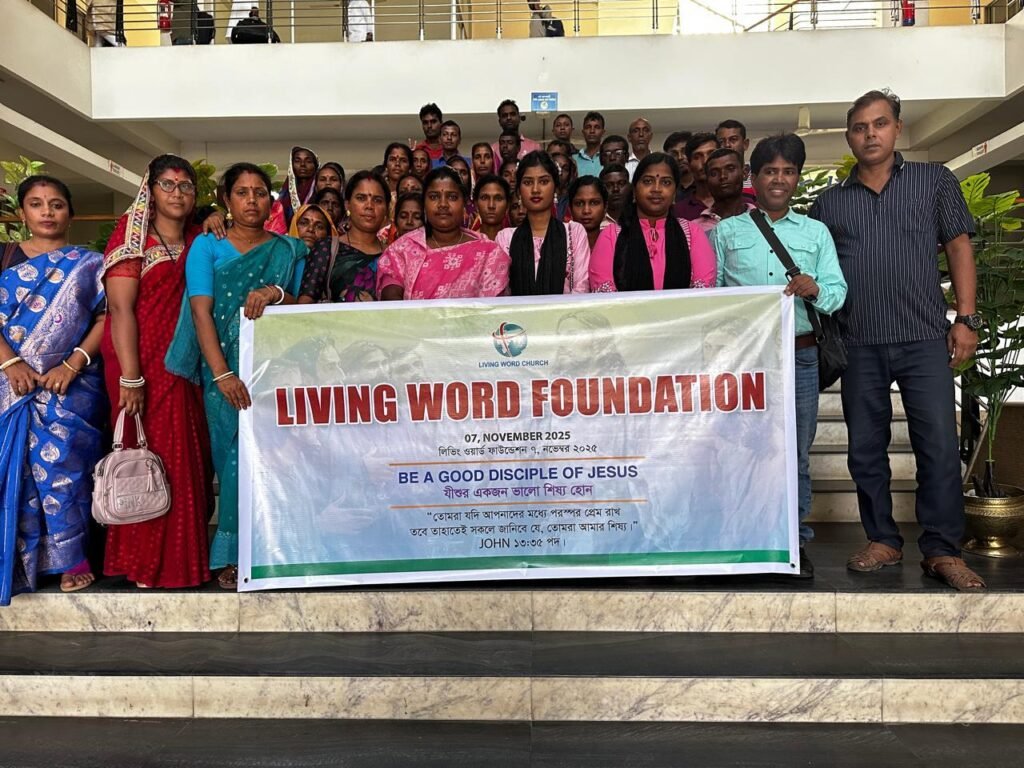
For organizations like Living Word Foundation, this makes long-term partnership especially important. Churches outside Bangladesh can help by praying, giving, supporting indigenous pastors, providing ministry resources, strengthening discipleship, and building relationships that equip local Christians rather than replace them.
Start With Prayer
One of the simplest and most important ways a church can support Christian missions in Bangladesh is through consistent prayer.
Prayer should go beyond a general request for “missionaries overseas.”
Churches can pray specifically for:
- Local pastors
- Christian families
- New believers
- Unreached communities
- Bible access
- Discipleship
- Ministry leaders
- Children’s ministry
- Church growth
- Wisdom and protection
- Opportunities to share the Gospel
Mission organizations such as Joshua Project provide information about people groups in Bangladesh that can help churches pray more specifically.
Joshua Project currently tracks hundreds of distinct people groups in Bangladesh and classifies the majority of them as unreached under its missions-research methodology.
These figures are estimates rather than official government statistics, but they help churches understand the scale and diversity of ministry needs.
Prayer becomes more meaningful when a congregation understands who and what it is praying for.
Support Indigenous Christian Pastors
One of the most effective ways churches can support Christian missions in Bangladesh is by investing in local pastors.
A visiting mission team may spend several days or weeks in a community.
A local pastor may serve that same community for decades.
That long-term presence matters.
Local pastors understand:
- The language
- Community relationships
- Family dynamics
- Religious sensitivities
- Local needs
- Cultural expectations
- The challenges facing new believers
They also provide continuity.
When an evangelistic event ends, the pastor remains.
When a new believer needs guidance, the pastor is there.
When a family experiences hardship, the pastor understands the situation.
Living Word Foundation emphasizes working alongside indigenous Christian leaders because strong local leadership is essential to sustainable ministry.
Churches can support this work by helping provide resources, training, pastoral support, and financial assistance that allows local leaders to continue serving their communities.
Help Provide Bibles and Discipleship Resources
Christian missions do not end with evangelism.
People need opportunities to understand Scripture and grow in their faith.
That means Bibles and discipleship resources are essential.
A church may help support:
- Bible distribution
- Children’s Bible materials
- Study guides
- Discipleship curriculum
- Leadership-training materials
- Christian education resources
- Small-group materials
Providing Christian resources is especially valuable when those materials are culturally and linguistically appropriate.
The history of Christianity in Bengal has long been connected with Bible translation and Christian publishing. Banglapedia’s history of Christianity in Bengal documents the role that Christian missions played in education, printing, and translation throughout the region.
Today, access to Scripture remains one of the foundations of long-term Christian discipleship.
Support Discipleship, Not Just Evangelism
It is easy for churches to focus on the most visible parts of mission work.
A large outreach event feels exciting.
A mission trip creates photographs and stories.
But sustainable Christian ministry is often much quieter.
It may look like a local pastor meeting with a new believer every week.
It may involve a small Bible study in a home.
It may mean teaching children Scripture over the course of several years.
It may involve mentoring a future church leader.
These activities may not appear dramatic, but they are often where the deepest ministry happens.
Jesus’ command in Matthew 28:19-20 is to make disciples.
That means churches should support ministries that remain committed to believers after the first Gospel conversation.
Living Word Foundation seeks to support evangelism and discipleship together so that new believers can grow, mature, and eventually disciple others.
Build Long-Term Mission Partnerships
One of the biggest mistakes churches can make is treating international missions as a series of disconnected projects.
A stronger approach is to build a long-term relationship.
That may involve supporting the same ministry, pastor, or region over many years.
Long-term partnerships allow churches to:
- Understand local ministry needs
- Pray more specifically
- Build trust
- See how ministry develops over time
- Support leadership development
- Respond when needs change
- Celebrate long-term growth
Living Word Foundation’s work in Bangladesh is built around relationships with local Christian leaders.
Churches that partner with this kind of ministry can move beyond occasional giving and become part of a more sustained effort.
Support Ministry Where Local Leaders Identify the Need
Outside churches should be careful not to assume they know what a community needs most.
A congregation in the United States may believe a church building is the top priority.
A local pastor may say Bibles are more urgently needed.
An outside donor may want to fund a large event.
A local leader may believe discipleship training would create a greater long-term impact.
The people serving on the ground usually have the clearest understanding of local circumstances.
Healthy mission partnerships therefore begin with listening.
A useful question for churches is:
What would help local Christians serve more effectively?
That question keeps ministry centered on the people who understand the community best.
Help Strengthen Christian Education
Education can be an important part of Christian ministry in Bangladesh.
Christian institutions have been involved in education in Bengal for generations, and Christian schools and organizations continue to serve communities today.
The U.S. Department of State’s International Religious Freedom Report on Bangladesh notes the presence of Christian educational institutions in the country, including schools operated by Catholic organizations.
Churches may be able to support:
- Children’s education
- Christian teaching
- School materials
- Literacy programs
- Bible education
- Teacher resources
- Discipleship for young people
When education is offered as genuine service, it can strengthen communities while also supporting the long-term work of local churches.
Help Meet Practical Needs Without Conditions
Christian missions often include compassionate service.
Families may face poverty, natural disasters, educational barriers, or other hardships.
Churches can help respond to these needs.
Support may include:
- Food assistance
- Emergency relief
- Educational resources
- Help for vulnerable families
- Children’s programs
- Community support
However, assistance should never be conditional on someone becoming a Christian.
Compassionate ministry should be offered because Christians are called to serve and love their neighbors.
That distinction is important.
Christian service becomes more credible when people know they are being helped because they matter, not because they are being pressured into changing their beliefs.
Support House Churches and Small Gatherings
Not every Christian community in Bangladesh meets in a large church building.
Some believers gather in homes or small meeting spaces.
These gatherings may include:
- Prayer
- Worship
- Bible study
- Fellowship
- Discipleship
- Leadership training
Churches outside Bangladesh can help support these communities by providing resources or helping with practical ministry needs.
A small group may seem insignificant, but it can become the foundation for long-term church growth.
Several believers can eventually become a stable congregation.
A small Bible study can develop future leaders.
One house church may eventually help start another.
This is one way Christian ministry can multiply organically.
Support Leadership Development
Mission work becomes stronger when leaders train other leaders.
A healthy church does not depend entirely on one pastor or missionary.
Future pastors, Bible teachers, discipleship leaders, and evangelists must be developed.
Churches can support leadership development by helping fund:
- Bible training
- Pastoral education
- Ministry workshops
- Discipleship programs
- Leadership resources
- Mentoring opportunities
The goal is multiplication.
A local pastor may train several younger believers.
Those believers may eventually begin teaching others.
Some may lead churches.
Others may start Bible studies or reach neighboring communities.
Over time, ministry becomes less dependent on outside leadership.
Learn About Bangladesh Before Trying to Serve There
Churches should also take time to understand Bangladesh itself.
The country has its own languages, history, religious traditions, ethnic groups, and cultural expectations.
Mission work becomes more effective when churches approach the country with humility rather than assumptions.
Useful areas of study include:
- Bangladesh’s religious demographics
- The history of Christianity in Bengal
- Unreached people groups
- The 10/40 Window
- Local church structures
- Cultural customs
- Religious freedom
- Indigenous ministry
Resources such as Joshua Project, Banglapedia, and the U.S. Department of State’s religious freedom reporting can provide useful background.
The more a church understands the country, the better equipped it is to support ministry responsibly.
Be Careful With Short-Term Mission Trips
Short-term mission trips can be valuable when they are designed around the needs of local ministries.
They can help build relationships, encourage pastors, provide training, and strengthen long-term partnerships.
But they should not become the center of the mission strategy.
A short-term team should ask:
Are we helping local leaders accomplish goals they have already identified?
Are we providing something useful?
Are we creating unnecessary work for the ministry hosting us?
Are we building relationships that will continue after the trip?
Are we respecting local culture?
Short-term missions are strongest when they support long-term ministry rather than compete with it.
Give Consistently Rather Than Only During Emergencies
Financial support is another important part of missions.
Consistent giving can help local ministries plan more effectively than occasional donations.
Regular support may help provide:
- Pastor support
- Ministry transportation
- Bibles
- Teaching materials
- Meeting spaces
- Children’s programs
- Leadership training
- Outreach
- Emergency assistance
Living Word Foundation works to connect outside support with ongoing Christian ministry in Bangladesh.
For churches, recurring support can create stability that makes long-term planning possible.
Educate the Entire Congregation
Missions should not belong only to a small committee.
Churches can involve the broader congregation by regularly sharing:
- Ministry updates
- Prayer requests
- Stories from local pastors
- Information about Bangladesh
- Unreached people groups
- Opportunities to give
- Missionary testimonies
- Scripture related to missions
When people understand the ministry, they are more likely to pray consistently and participate meaningfully.
This also helps missions become part of the church’s identity rather than an occasional fundraising campaign.
Remember That Local Christians Are Partners, Not Projects
Perhaps the most important principle is to view Bangladeshi Christians as partners.
They are not simply recipients of foreign generosity.
They are pastors, evangelists, teachers, parents, disciples, church leaders, and missionaries within their own communities.
They possess knowledge, experience, and relationships that outside churches do not.
A healthy missions relationship recognizes that.
Outside churches may provide financial resources.
Local leaders provide cultural understanding.
Outside churches may provide training.
Local pastors provide long-term presence.
Outside churches may help fund ministry.
Local Christians carry that ministry forward every day.
Both sides have something valuable to contribute.
Supporting Christian Missions Through Living Word Foundation
Living Word Foundation’s approach to Christian ministry in Bangladesh is built around strengthening the work of local Christian pastors, leaders, and communities.
That can include support for evangelism, discipleship, Bible access, Christian education, leadership development, prayer, and outreach to communities with limited Christian presence.
Churches that want to support Christian missions in Bangladesh do not have to create an entirely new ministry strategy on their own.
They can partner with organizations that already have relationships with local leaders.
The goal is not simply to send resources overseas.
It is to help those resources strengthen ministry that is already taking place.
A Better Model for Supporting Missions in Bangladesh
Supporting Christian missions in Bangladesh requires more than enthusiasm.
It requires patience.
It requires prayer.
It requires cultural humility.
And it requires a willingness to listen to the people who understand local ministry best.
Churches can make a meaningful difference by investing in indigenous pastors, supporting discipleship, helping provide Scripture and ministry resources, strengthening Christian education, giving consistently, and building relationships that last.
Most importantly, they can support Bangladeshi Christians as they share the Gospel and serve their own communities.
Living Word Foundation seeks to help churches participate in Christian missions in Bangladesh by connecting support with locally led, long-term ministry.
When outside churches and indigenous Christian leaders work together in genuine partnership, missions can move beyond one-time projects and toward something far more sustainable: strong local churches, mature disciples, equipped leaders, and Christian communities capable of reaching others for generations to come.