
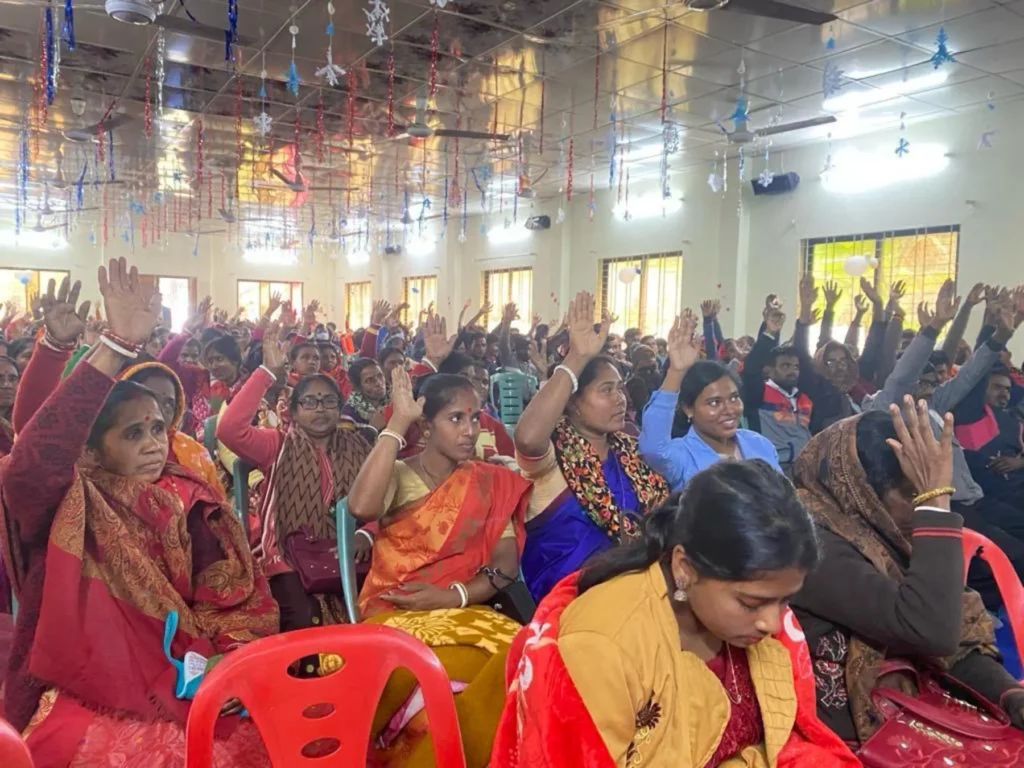
Bangladesh is home to more than 170 million people and a remarkable range of languages, ethnic communities, cultures, and religious traditions. While the country is overwhelmingly Muslim, its population is far from culturally uniform. Different communities may have their own histories, dialects, customs, family structures, and religious identities.
For Christian missions, those distinctions matter.
Mission organizations often use the term unreached people group to describe a culturally distinct community where there is not yet a sufficiently large, established indigenous Christian presence to evangelize and disciple the wider group without meaningful outside assistance.
Bangladesh contains a particularly high number of communities classified as unreached by missions researchers. According to the current Joshua Project profile for Bangladesh, the organization tracks 277 people groups in the country and classifies 255 of them as unreached under its methodology.
That means approximately 92% of the people groups Joshua Project tracks in Bangladesh fall into its unreached category.
For Living Word Foundation, these figures help explain why reaching unreached communities, strengthening indigenous Christian leadership, and supporting long-term discipleship are central to Christian ministry in Bangladesh.
What Is an Unreached People Group?
The phrase “unreached people group” can sometimes create the wrong impression.
It does not necessarily mean that no Christian has ever visited a community or that no one within the group has ever heard the name of Jesus.
Instead, it generally refers to a community where the local Christian population is too small or lacks the resources necessary to spread the Gospel throughout the wider group without outside help.
Different missions organizations use slightly different definitions and thresholds. Joshua Project, for example, combines information about evangelical populations, Christian adherents, church movements, language, ethnicity, geography, and other factors when categorizing groups.
That means the number of unreached people groups should always be understood as a missions-research estimate rather than an official government statistic.
Joshua Project itself notes that its data comes from multiple sources and that estimates may differ significantly between researchers. Still, these classifications can help churches and ministries understand where Christian communities have a very limited presence.
How Many Unreached People Groups Are in Bangladesh?
Joshua Project currently lists:
- 277 total people groups in Bangladesh
- 255 unreached people groups
- 215 groups categorized as unreached frontier groups
- Approximately 98.9% of the country’s population living within groups it classifies as unreached
These numbers come from Joshua Project’s current Bangladesh research and should be interpreted within its particular missions methodology.
The figures can initially sound surprising because Bangladesh does have existing Christian communities, churches, pastors, schools, and ministries.
The explanation is that the people-group model does not simply ask whether Christians exist somewhere within a country’s borders.
It asks whether a particular cultural or ethnic community has an established Christian presence capable of reaching and discipling others within that same group.
A country can therefore have historic Christian churches while still containing many communities with very limited access to those churches.
Who Are the Unreached People Groups in Bangladesh?
There is no single type of unreached person in Bangladesh.
Some unreached groups are large, while others include only a few thousand people. Some primarily speak Bengali, while others have their own languages or dialects. Some are predominantly Muslim, while others follow Hinduism, Buddhism, or smaller religious traditions.
Joshua Project’s Bangladesh database, for example, includes groups such as the Abdul, Aguri, Ansari, Bauri, Hajong, Konai, Rakhine, Rohingya, and many others. The database identifies different primary languages and religious traditions among these communities. (Joshua Project)
This diversity is important.
It means Christian missions cannot assume that a ministry strategy that works in one Bangladeshi community will automatically work in another.
Even two communities living relatively close to one another may differ in language, social structure, religious background, education, economic circumstances, and attitudes toward Christianity.
Effective ministry requires understanding those differences.
Why Language Matters
Language is one of the most important factors in Christian ministry among unreached communities.
Bengali is the national and most widely spoken language in Bangladesh, but it is not the only language spoken throughout the country.
Some ethnic communities speak their own languages, while others may speak Bengali as a second language.
That affects evangelism, Bible teaching, discipleship, and Christian education.
A Gospel presentation delivered in a technically understandable language may still feel distant if it does not reflect the language people use in their homes, families, and communities.
The same applies to Bible resources.
Translation is not simply about replacing words. Good Christian communication requires understanding how people express concepts such as God, sin, forgiveness, family, authority, sacrifice, and faith within their own cultural setting.
This is one reason local Christian leaders can be so important in ministry among unreached people groups.
Why Culture Matters as Much as Geography
It is tempting to think of missions primarily in geographic terms.
A church may say that it is “reaching a village” or “serving a district.”
But mission researchers often focus on people groups because geography alone does not explain how communities interact.
Two different ethnic or religious groups may live in the same city while having very little meaningful social interaction with one another.
People often form relationships primarily within their own families, communities, occupations, ethnic networks, or religious groups.
As a result, the presence of a Christian church several miles away does not necessarily mean that every surrounding community has meaningful access to Christian teaching.
This is why ministry among unreached people groups often depends on relationships.
The Gospel frequently travels through trusted personal connections rather than simply through proximity.
The Importance of Indigenous Christian Leaders
Local Christian leadership becomes especially important when ministry crosses cultural boundaries.
A foreign missionary may study Bangladesh carefully, learn the language, and develop a strong understanding of the country. But someone who grew up within a Bangladeshi community possesses a level of cultural knowledge that cannot be quickly reproduced.
Local pastors and Christian leaders understand family dynamics.
They understand community expectations.
They recognize religious sensitivities.
They know which approaches may build trust and which may unintentionally create barriers.
They also remain present.
That long-term presence is one of the most important advantages of indigenous ministry.
For this reason, Living Word Foundation emphasizes working alongside local Christian leaders in Bangladesh rather than viewing outside missionaries as the permanent center of ministry.
The goal is not to replace Bangladeshi Christians.
It is to help strengthen and equip them.
Evangelism Among Unreached Communities
Evangelism among unreached people groups is rarely as simple as organizing a large public event and expecting a long-term Christian community to emerge.
In many cases, ministry begins quietly.
A Christian builds a friendship.
A family becomes curious about Christianity.
Someone asks questions about Jesus.
A local believer shares Scripture.
Conversations continue.
Trust develops.
Over time, those relationships can create opportunities for deeper Bible study and discipleship.
Cultural and religious realities make this kind of relational approach especially important in Bangladesh.
The U.S. Department of State’s reporting on religious freedom in Bangladesh notes that the constitution protects religious practice and equality while also documenting challenges faced by religious minorities in some communities.
For Christian ministry, this reinforces the need for wisdom, respect, and sensitivity.
Evangelism Without Discipleship Is Incomplete
Reaching an unreached community cannot simply mean delivering a Gospel message and moving on.
The Great Commission calls Christians to make disciples.
That means people need opportunities to learn Scripture, ask questions, pray, worship, develop relationships with other Christians, and mature in their faith.
A person who becomes interested in Christianity within an unreached community may have very limited access to mature Christians.
There may not be a church nearby.
There may not be a pastor from the same cultural background.
Christian books or Bibles may be difficult to obtain.
Family members may not understand the person’s interest in Christianity.
That is why discipleship must be built into missions from the beginning.
Living Word Foundation seeks to support ministry that does not stop at evangelism but continues into Bible teaching, Christian fellowship, and long-term spiritual growth.
Why House Churches Can Matter
In communities with few Christians, believers may initially gather in homes rather than established church buildings.
Small gatherings can provide a place for prayer, Bible study, worship, discipleship, and fellowship.
They can also allow new Christian communities to develop organically.
A small group may eventually grow into a larger congregation, but church growth does not have to begin with a building.
The priority is developing a healthy community of believers.
When local Christians are equipped to teach Scripture, disciple others, and lead gatherings, ministry can continue even with limited outside resources.
Why Unreached Does Not Mean Forgotten
Statistics about unreached people groups can become overwhelming.
Hundreds of people groups.
Millions of people.
Dozens of languages and cultural barriers.
But Christian ministry ultimately happens one relationship at a time.
The term “unreached” should never cause Christians to view people as a project or statistic.
Every community includes individuals with families, histories, hopes, struggles, traditions, and deeply held beliefs.
Respect matters.
Listening matters.
Patience matters.
The goal of missions is not cultural erasure.
Christian ministry should not require people to abandon their ethnic identity, language, or cultural heritage in order to follow Jesus.
Instead, healthy indigenous churches can express Christian faith within their own cultural context while remaining grounded in Scripture.
Bangladesh’s Frontier People Groups
Joshua Project also uses the term frontier people group for certain unreached groups with particularly little or no known Christian movement.
According to its current Bangladesh data, 215 of the country’s 277 tracked people groups are classified as unreached frontier groups.
Again, that number reflects Joshua Project’s methodology rather than an official demographic category.
But it highlights something important for Christian missions.
Some communities may have little existing Christian infrastructure from which ministry can grow.
In those situations, establishing trusted relationships, identifying potential local leaders, providing access to Scripture, and developing sustainable discipleship can take years.
That is why missions among unreached communities require long-term commitment.
Why Local Churches Matter to Long-Term Missions
Outside organizations can provide resources, training, financial assistance, prayer, and encouragement.
But a healthy Christian mission should ultimately strengthen local churches rather than make them permanently dependent on outside leadership.
The ideal progression is multiplication.
A believer shares the Gospel.
Someone begins following Jesus.
That person is discipled.
A Christian community forms.
Local leaders emerge.
Those leaders disciple others.
Eventually, that community begins reaching people beyond itself.
This model allows Christianity to become rooted within a community rather than remaining associated primarily with foreign missionaries.
Living Word Foundation seeks to support that kind of locally led Christian ministry in Bangladesh.
How Christians Can Support Unreached People Groups in Bangladesh
Christians outside Bangladesh can participate without assuming they know more than the people already serving there.
One of the most meaningful starting points is prayer.
Churches can pray specifically for unreached communities, local pastors, Christian families, Bible access, discipleship, and opportunities for people to hear and understand the Gospel.
Organizations can also support trusted local ministries financially and practically.
Resources may help provide Bibles, discipleship materials, leadership training, children’s education, pastoral support, meeting spaces, or other ministry needs.
Churches can also educate their congregations about Bangladesh so that missions involvement becomes informed rather than abstract.
Reaching the Unreached Through Sustainable Ministry
The scale of unreached people groups in Bangladesh shows why short-term strategies alone are not enough.
According to Joshua Project’s current estimates, 255 of the 277 people groups it tracks in Bangladesh are unreached, representing more than 92% of the groups in its database.
Those numbers should motivate Christians, but they should also produce humility.
Lasting ministry requires more than urgency.
It requires patience.
It requires discipleship.
It requires cultural understanding.
It requires strong local pastors.
And it requires Christians who are willing to invest in communities for the long term.
Living Word Foundation’s Christian ministry in Bangladesh seeks to work alongside indigenous pastors and Christian leaders who can share the Gospel, disciple believers, strengthen churches, and reach communities that have had limited access to Christian teaching.
For Christians who care about unreached people groups in Bangladesh, supporting those local believers may be one of the most sustainable ways to help the Gospel continue moving from one family, village, and community to the next.